When Hormones Fall While You Sleep: The Testosterone-ED Connection Men Are Missing
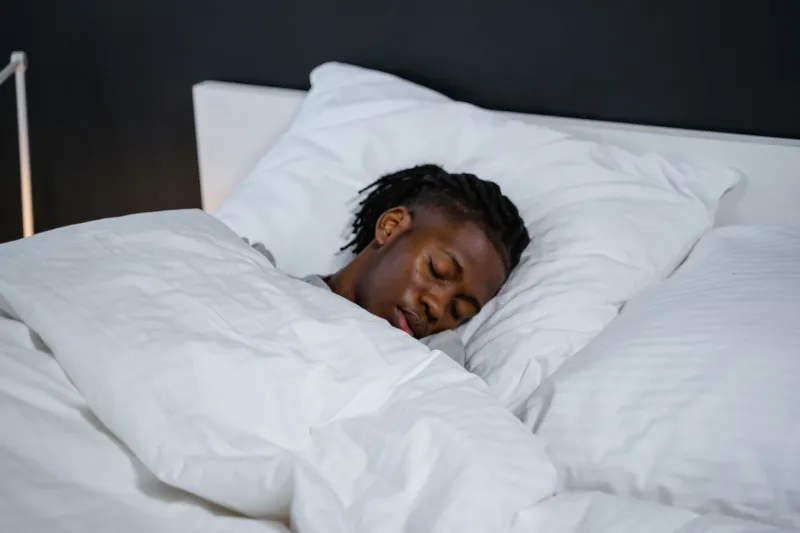
For many American men managing erectile dysfunction, the conversation with their physician follows a familiar arc: symptoms are described, a phosphodiesterase-5 inhibitor is prescribed, and the expectation is set that the medication will do the necessary work. That framework is clinically sound—but increasingly, sleep medicine specialists and urologists are recognizing that it may be incomplete for a significant subset of patients.
The reason involves a biological process most men have never been told about: the nocturnal surge in testosterone that healthy sleep is supposed to deliver—and what happens to sexual function when that surge is chronically suppressed.
The Overnight Hormone Factory
Testosterone is not produced at a flat, steady rate throughout the day. The body operates on a circadian rhythm that front-loads testosterone synthesis during sleep, particularly during the deep, slow-wave stages and the rapid eye movement (REM) phase. In men with healthy sleep architecture, the majority of daily testosterone release occurs during these nighttime windows, reaching its peak in the early morning hours.
This is not incidental. The relationship between sleep and testosterone is bidirectional and tightly regulated. Studies published in journals including JAMA Internal Medicine have demonstrated that restricting sleep to five hours per night for just one week can reduce daytime testosterone levels in young, healthy men by 10 to 15 percent—an effect comparable to aging ten to fifteen years in hormonal terms.
For men who already have baseline testosterone levels on the lower end of the clinical range, even modest nocturnal disruptions can push them into territory where sexual function is meaningfully compromised.
Where Sleep Apnea Enters the Picture
Obstructive sleep apnea (OSA) affects an estimated 30 million Americans, and a significant proportion remain undiagnosed. The condition causes the upper airway to partially or fully collapse during sleep, producing repeated episodes of oxygen deprivation and fragmented sleep architecture. What most men associate with OSA—loud snoring, daytime fatigue, morning headaches—are surface-level symptoms of a deeper physiological disruption.
Below the surface, OSA inflicts consistent damage on the hormonal environment that nocturnal testosterone production requires. Each apneic episode triggers a micro-arousal that pulls the brain out of deep sleep. When this occurs dozens or even hundreds of times per night, the slow-wave and REM stages that anchor testosterone synthesis are chronically curtailed.
The downstream effect is measurable. Research published in Endocrine Practice and other peer-reviewed outlets has found that men with moderate-to-severe OSA exhibit significantly lower total and free testosterone levels compared to age-matched controls without sleep disorders. More telling: testosterone levels in these men often improve meaningfully following effective treatment with continuous positive airway pressure (CPAP) therapy—without any direct hormonal intervention.
This is a critical clinical signal. When testosterone recovers in response to restored sleep architecture, it strongly implies that the deficiency was, at least in part, a consequence of disrupted sleep rather than primary hypogonadism.
The Compounding Effect on Erectile Function
Testosterone's role in erectile function is often misunderstood. The hormone does not directly produce erections—that mechanism is primarily mediated by nitric oxide signaling and vascular responsiveness, which is why PDE5 inhibitors are effective even in men with normal testosterone levels. However, testosterone does play a meaningful supporting role: it maintains the sensitivity of penile tissue to nitric oxide, supports libido and psychological arousal, and contributes to the overall vascular health that underlies erectile capacity.
When nocturnal testosterone suppression is chronic, the result is not a single, isolated deficit. Instead, men experience a compounding pattern in which reduced hormonal priming diminishes the psychological drive to initiate sexual activity, reduces the biological responsiveness of erectile tissue, and—critically—can blunt the clinical effectiveness of ED medications that require a baseline level of arousal to work optimally.
This may explain why a subset of men report that their prescribed ED medication works inconsistently or less effectively over time, even when the dosage appears appropriate. The variable is not always the medication—it may be the hormonal environment in which the medication is being asked to perform.
Recognizing the Warning Signs
Men who suspect that their sleep quality may be contributing to their ED symptoms should consider several overlapping indicators:
Fatigue that persists despite adequate time in bed. Feeling unrefreshed after seven or more hours of sleep is a hallmark of fragmented sleep architecture, even when the individual is not consciously aware of nighttime awakenings.
A partner who reports snoring, gasping, or irregular breathing. These observations, while disruptive to the relationship, are clinically valuable and should be communicated to a physician.
Morning testosterone levels that test low or borderline. Because testosterone peaks in the early morning, a blood draw conducted before 10 a.m. on multiple days provides the most accurate baseline. Men whose levels fall in the lower third of the normal range—or below it—warrant further investigation into potential sleep-related causes.
ED symptoms that are worse after poor sleep. Men who notice a clear correlation between nights of disrupted rest and subsequent erectile difficulties are observing a pattern that deserves clinical attention, not dismissal.
Practical Steps Before Defaulting to Medication Alone
None of this is an argument against evidence-based ED medications—they remain among the most rigorously studied and effective treatments available for erectile dysfunction, and for many men they are an appropriate and sufficient intervention. However, men who have reason to suspect a sleep-related hormonal component deserve a more thorough evaluation before assuming that a higher dose or a different molecule is the answer.
The following steps represent a reasonable screening pathway:
-
Request a sleep study. Home sleep apnea tests are now widely available and covered by most major insurance plans when clinical criteria are met. A polysomnography conducted in a sleep lab offers more detailed data. Either can detect OSA and quantify its severity.
-
Obtain a morning testosterone panel. A single testosterone measurement is insufficient for diagnosis. Request both total and free testosterone on at least two separate mornings, along with luteinizing hormone (LH) and follicle-stimulating hormone (FSH) levels to help distinguish between primary and secondary hormonal causes.
-
Discuss the findings with both a urologist and a sleep specialist. These disciplines do not always communicate proactively with one another, but the intersection of their expertise is precisely where the solution for many men lies.
-
Give CPAP therapy adequate time. Men who begin CPAP treatment should understand that hormonal recovery is gradual. Testosterone normalization following effective OSA treatment may take three to six months, and ED improvements may follow a similar timeline.
A More Complete Picture of Sexual Health
At VitalEdge Health, our commitment is not simply to connect men with effective medications—it is to ensure that those medications are deployed within the context of a genuinely informed understanding of what is driving the problem. For men whose erectile dysfunction is rooted in, or significantly worsened by, nocturnal testosterone suppression from untreated sleep disorders, addressing only the surface symptom with a PDE5 inhibitor is a partial solution at best.
The body does not compartmentalize the way clinical specialties sometimes do. What happens during sleep shapes what is possible during waking life—and for men who are serious about reclaiming their sexual health, the night is worth paying attention to.